


News
From the sports field to the workplace: An bringing an interdisciplinary approach to Vocational Rehabilitation

Sport and Exercise Physician | Managing Director
Published
August 4, 2026
Sport and Exercise Physician | Managing Director
Published
August 4, 2026
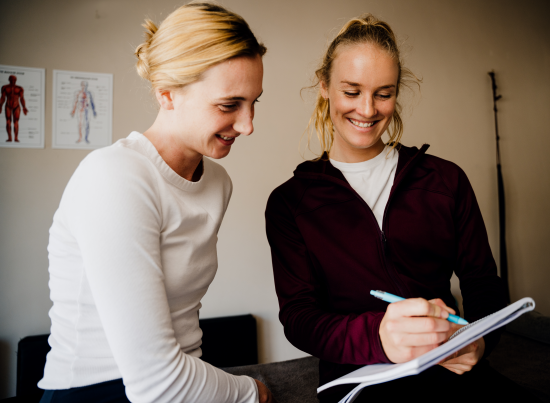
For years, Axis Sports Medicine has helped elite athletes return not just to health, but to performance, through coordinated, interdisciplinary care. We're now bringing that same approach to a new challenge: helping New Zealanders return to work. We have been awarded an ACC Vocational Rehabilitation (VOC) contract, and while vocational rehabilitation is a new service for us, the thinking behind it is not. That thinking has shaped how we've built out team. Over the past few years, we have deliberately expanded our multidisciplinary workforce. Alongside of our Sport & Exercise Physicians, Orthopaedic Surgeons and Physiotherapists, we have started to grow a team of vocational rehabilitation clinicians who bring expertise in return-to-work planning, workplace rehabilitation and occupational health.
Recovery from injury is rarely just about diagnosis or treatment in isolation. Successful outcomes require coordinated input from clinicians with complementary expertise, working together towards goals that matter to the patient.
That's the model we've long used in elite sport. This process requires close collaboration between specialists, physiotherapists, strength and conditioning coaches, sport scientists and the athlete, with everyone working towards a shared objective. We believe the same principles apply to returning people to work. Although the destination may be different, coordinated rehabilitation, clear communication and evidence-informed decision making are just as important.
Returning to work is one of the most meaningful outcomes for many injured people. Work provides a structure, purpose, social connection and financial security. ACC has recognised that returning people to safe and sustainable employment is a critical part of recovery, and we share that vision. Our ultimate aim is to ensure that patients receive specialist injury management and return-to-work advice as part of the same coordinated episode of care, rather than as separate processes.
A central principle of our vocational rehabilitation programme is that, wherever possible, rehabilitation should occur in the environment to which the patient is returning. In elite sport, we do not rehabilitate athletes simply to leave in clinic. We rehabilitate them to perform on the training field, and ultimately in competition. We believe the same philosophy applies to work. Rather than viewing the workplace as the destination of rehabilitation, we aim to make it part of the rehabilitation itself. Where appropriate, patients are encouraged to progressively increase their capacity through graduated duties, modified tasks, and carefully planned workplace exposure. This enables rehabilitation to reflect the real physical, cognitive and environmental demands of the job whilst allowing patients to remain engaged in meaningful work. For many people, this leads to a more relevant and sustainable recovery than rehabilitation undertaken solely in a clinical setting.
Of course, workplace rehabilitation is not appropriate or feasible for everyone. Some employers are unable to accommodate modified duties, which some injuries require patients to first develop sufficient capacity before returning to the workplace. In these situations, rehabilitation can be undertaken within our clinics for gym facilities, were work-specific tasks can be replicated and progressively advanced until patients are ready to transition back to their role. Alternatively, this rehabilitation may be done via the patient's treating physiotherapists of other clinicians, with support from our specialists and vocational clinicians.
The strength of this model lies in genuine integration. Our Sport and Exercise Physicians, Physiotherapists and Vocational Rehabilitation clinicians work together as one interdisciplinary team, developing a single rehabilitation plan rather than parallel clinical and vocational pathways. This complements, rather than replaces, the excellent work undertaken by community physiotherapists. By aligning specialist medical management, physiotherapy and vocational rehabilitation, patients receive consistent advice, shared goals and coordinated decision making throughout their recovery.
For general practitioners, physiotherapists and surgeons, this means access to a service where specialist injury management and vocational rehabilitation are fully integrated. Patients benefit from coordinated care, employers receive clear and practical guidance, and everyone involved is working towards the same objective: helping people recover well, return to work safely and remain there successfully.
At Axis, we have spent many years helping athletes return to performance through coordinated interdisciplinary care. We are excited to bring that same philosophy, expertise and collaborative approach to helping New Zealanders return to meaninful work.


