


Insight
Twist, Pop, Swell ... When It's Not An ACL

Sport and Exercise Physician | Managing Director
Published
June 2, 2026
Sport and Exercise Physician | Managing Director
Published
June 2, 2026
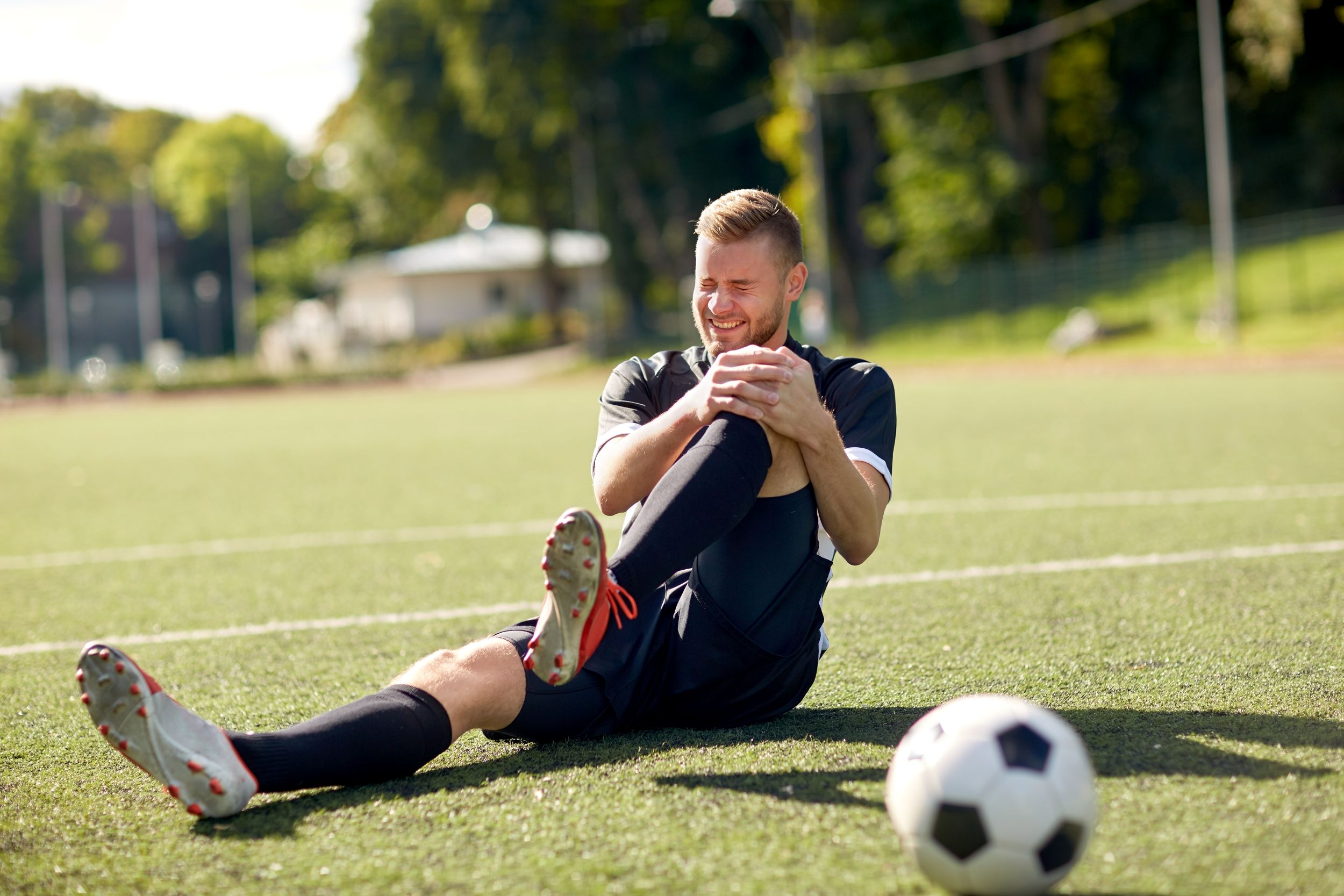
A young netball player present with an acute knee injury. She reports planting, twisting and feeling a pop. Her knee then swells within a few hours. Most of us immediately think of an ACL injury in this situation. While that's often the correct diagnosis there is another injury that presents in almost the same way and is frequently under-recognised, patellar instability.
When the patella dislocates this is generally an easy diagnosis. The patient will report their patella sitting out of place and having to seek assistance to reduce the dislocated joint. In many cases however the patella dislocates and relocates quickly, a subluxation. These players will generally report a feeling of instability or "something going out of place" but are often not aware the joint has dislocated. As a result, the history can be indistinguishable from an ACL rupture, particularly in younger, active patients. A valgus mechanism, a sense of giving way, and rapid effusion should also prompt consideration of both diagnoses.
Unlike ACL injuries, most first-time patellar dislocations are managed non-surgically. The immediate focus is generally straightforward. Reduce the patella if needed, manage pain and swelling, and begin early movement. From there, management often becomes less structured. Patients are commonly reassured that things will improve with time and there is a limited focus on obtaining additional imaging or further defining the injury. There is also less emphasis on restoring high-level function or preparing properly for return-to-play. This may be because this is generally not a surgical problem.
That approach misses the bigger picture. Like ACL injuries, patellar instability has very high recurrence rates, especially in younger and sporting populations. Each episode involves significant morbidity and carriers a risk of further articular cartilage injury and associated longer-term patellofemoral joint (PFJ) problems. Despite this, rehabilitation is often less rigorous than for ACL injuries and return-to-play decisions are frequently based on time rather than objective function.
I think that there are two early priorities that we should consider for all patients that we see with PFJ instability.
Imaging - a formal knee x-ray series is important as it can help define patellofemoral joint (PFJ) morphology, which can have a big impact on further injury risk. The initial x-rays are often done non-weight bearing and generally don't include a skyline view. Obtaining a structured weight bearing x-ray series is important as these can be used to measure patella alta and to define the patellar and trochlear morphology. I also always arrange an MRI scan after a first-time dislocation. This is for two reasons:
Firstly, osteochondral injuries are often uncommon and may require early surgical management. The initial event is generally the most traumatic, and the most likely to cause an acute osteochondral injury. These can be easy to miss clinically and may not be seen on an x-ray.
The second reason for obtaining MR imaging is because it is very good at defining PFJ morphology. Features such as trochlear dysplasia, patella alta, and lateralisation of the tibial tubercle all influence recurrence risk and help guide prognosis and decision-making. Knowing about these features can have a big impact on rehabilitation and may prompt consideration of early surgical treatment.
Secondly is ensuring that the patient understands the risk of recurrence and the need for high-quality rehabilitation and return-to-play planning. These injuries should be managed with the same principles we apply to ACL injuries. Players need to demonstrate excellent strength, neuromuscular control, and confidence before returning to change of direction activity. Quadriceps strength, limb symmetry, and the ability to tolerate single-leg and sport-specific loads all matter. Similarly, some form of objective return-to-play testing is also suggested to provide objective evidence to support return-to-play. Without this, recurrence risk remains high.
In summary, patellar instability is not a benign injury that resolves when the joint has been relocated and the initial symptoms settle. It sits in the same clinical space as ACL injuries with regard to the need for structured rehabilitation, but too often it does not receive the same level of attention in recovery.
At Axis, we take a structured approach to these injuries through our Acute Knee Clinic. Early specialist assessment, early imaging (if required), and a coordinated plan that links diagnosis to rehabilitation and, where needed, surgical input.
If you are seeing a young patient who presents after a twist, pop and swell, and the ACL feels intact, it is worth asking what else might be going on.


