


Insight
Sideline Trauma: The skills you use the least, might matter the most

Sport and Exercise Physician | Managing Director
Published
May 4, 2026
Sport and Exercise Physician | Managing Director
Published
May 4, 2026
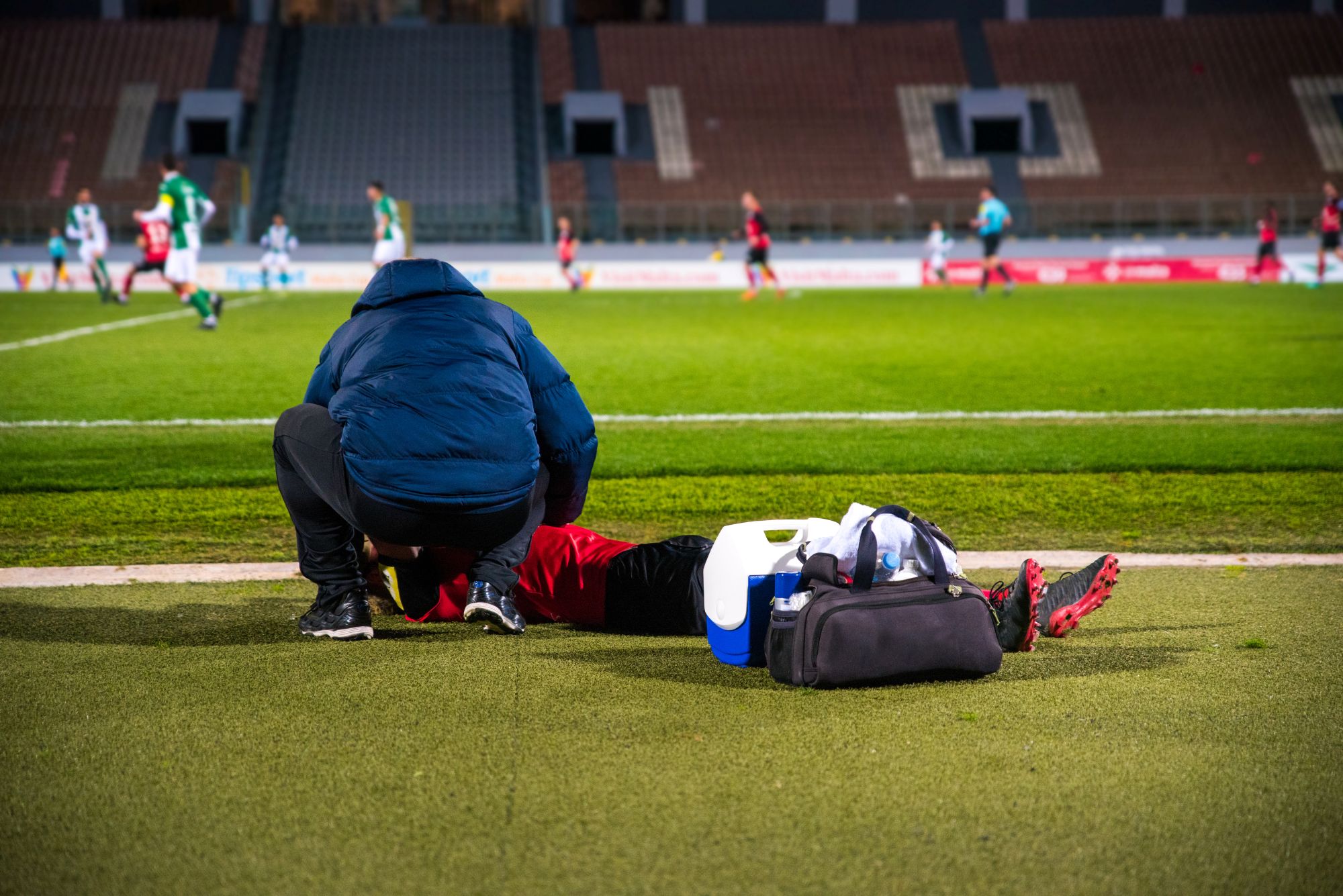
I recently completed an ICIR sideline trauma course run by New Zealand Rugby. It was practical, well delivered, and focused on skills that are directly relevant to those of us working in collision sport. It was also a good opportunity to spend time with a group of like-minded clinicians from across the country, and to be taught by experienced instructors including my Axis colleagues Dr Stephen Kara and Dr Simon Kim.
The main takeaway was not the course content itself. It was the recognition that these skills fade if they are not actively maintained. Sideline trauma is not something most of us do often enough to rely on experience alone. It requires deliberate, ongoing practice. This contrasts with much of our clinical work.
In clinic, repetition drives competence and we become very comfortable working in this environment. For example, if you are seeing knee injuries everyday your assessment becomes efficient, your pattern recognition improves and you develop competence. That volume simply does not exist in the sideline environment.
Working with the One New Zealand Warriors, I might manage a potential cervical spine injury only a few times each season. The consequence is a clear gap between knowing what to do and being able to execute it instinctively under pressure.
Closing that gap comes down to practice. The NRL requires teams to rehearse these scenarios annually, but in reality, that is only a minimum standard. At the Warriors we train more frequently, and in FIFA football tournaments this type of rehearsal happens before every match. The sideline medical team are required to practice a scenario relating to sudden cardiac arrest and a cervical spine injury. This reflects the reality that these are perishable skills, even for those managing similar problems in an emergency room setting.
The sideline environment is different, Cervical spine stabilisation, log rolls, and the early management of cardiac arrest are not technically complex, but they rely on coordinated team execution. Without regular rehearsal, timing drifts, communication becomes less precise, and simple actions lose focus and efficiency.
Alongside practice, structure matters. Frameworks such as the FIFA Pre-Event Medical Action Plan (PEAP) are built on the same principle that underpins high performance sport. Players train constantly because it improves performance. They are given defined roles to perform by their manager or coach. Medicine is no different. The PEAP formalises that thinking by requiring teams to define roles before the event.
In the NRL, this is reinforced through pre-match medical meetings where team doctors, paramedics, and game day medical managers align on responsibilities. Who leads the response, who manages the airways, who controls the cervical spine, who manages equipment, and how communication flows are all agreed in advance. This limits uncertainty and allows the response to be immediate and coordinated.
A plan alone if not enough. It needs to be rehearsed in the environment it will be used. The combination of clear role definition and repeated practice is what allows a team to function under pressure without hesitation.
If you are working on the sideline, it is worth asking a simple question. Are you genuinely prepared? That means having the right equipment available, understanding your role within the team, and bring confident that you can execute these skills when it matters. Preparation in this space is not theoretical. It is built through repetition, structure, and deliberate practice so that when the moment comes, the response feels automatic.


