


Insight
Surviving the Season: Managing Attrition in Professional Sport

Sport and Exercise Physician | Managing Director
Published
October 1, 2026
Sport and Exercise Physician | Managing Director
Published
October 1, 2026
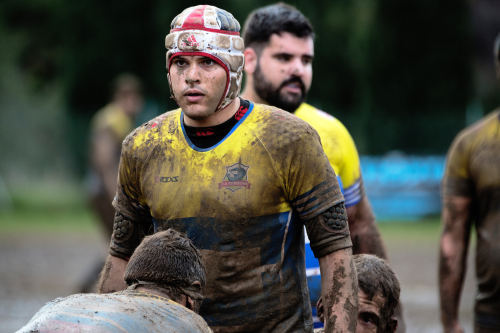
As the Warriors season winds up, I have been reflecting and thinking a lot about how we managed and worked with the team across 26 games. At the beginning of the season, much of the attention is on selecting the best team. By the end of the year, as part of the medical team we find much more focus on us as the focus shifts to who is still available, and whether they are actually ready to play. This is true whether you are trying to keep an over-40s football team on the park on a Sunday morning or managing a squad of professional rugby league players. Injuries accumulate, players become unavailable and, sooner or later, someone who wasn't initially expected to play a major role is asked to step up.
The NRL provides a good example. There is an extremely long season, players are subjected to repeated collisions, regular travel, and potentially finals. This all creates a substantial physical burden. Serious injuries remove some players for months, while others miss shorter periods with muscle injuries, concussion and joint problems. This gradual process of attrition means that by late in the season, the team taking the field may look very different from the one that started round one.
Attrition also creates a less obvious problem. As established players are lost, their replacements may not be as well prepared for the demands they are suddenly being asked to meet. A reserve-grade player can train well all week and still accumulate substantially less high-intensity exposure than a regular starter. Professional football data demonstrate that non-starters typically accumulate less high-speed running, sprint exposure and overall match load, even when clubs provide additional training. When that player is suddenly required to start, the problem may not be that they have been doing too much. They may not have recently done enough of the work they are now expected to tolerate.
The workload literature around this issue has been controversial. Early rugby league research suggested that players with a good background of chronic training tolerated demanding periods better, while sudden increases in load were associated with increased injury risk. The concept of the acute: chronic workload ratio subsequently became popular but has since been criticised because of important methodological and statistical limitations. That does not mean the underlying principle should be discarded with more recent evidence, particularly around high-speed running, still suggesting that abrupt changes in exposure are important. There is no magic ratio or universally safe threshold, but preparedness for the load still matters.
Preparation for a long season starts well before the first game. One prospective study followed elite rugby league players through a 17-weel preseason and subsequent 26-round season. This data shows that for every additional 10 full preseason training sessions completed there was a 17% reduction in the odds of injury in the following week, and players completing more preseason missed fewer games during the season. This is observational data, so we need to be more cautious about causation, particularly because healthier players are more likely to complete preseason in the first place. However, it aligns with what may players and high-performance staff observe in practice.
"Preseason isn't simply about being fit for round one. It helps build the physical reserve required to tolerate a long season."
The challenge is maintaining that reserve across the whole squad once competition begins. Players who are regularly selected continue to receive match exposure, while those outside the team may progressively lose some of it. In football, and to some extend rugby union, this can be addressed by introducing a player for 15, 30 or 50 minutes and progressively building towards a full match. Rugby league provides fewer opportunities to do this, with several NRL positions expected to play close to the full 80 minutes once selected. Reserve players therefore need purposeful top-up work throughout the season, including appropriate high-speed running, acceleration and deceleration, conditioning and, in collision sports, enough contact to maintain tolerance. Reserve-grade competition is particularly valuable because some aspects of match intensity are difficult to reproduce in training. The aim is not simply to keep these players fit. It is to minimise the gap between what they have recently expereienced and what they may suddently be asked to do.
As attrition progresses, teams may also need to reach further into their squads. The replacement is increasingly likely to be a younger player who may have the talent to compete at senior level but not yet have the same physical preparation. Rugby league research comparing junior and senior players has found relatively similar running demands per minute, but senior players perform more carries and tackles and are exposed to greater contact demands. A young player can therefore look aerobically and technically ready without necessarily being physically prepared for senior competition. Strength, speed, collision, exposure and match minutes need to be developed alongside skill, rather than waiting until an injury elsewhere in the squad suddenly creates an opportunity.
Players who need to return from injury are also at risk of further injury. Return to play is often treated as the end point of rehabilitation, but in many cases, it is better viewed as another stage in the recovery process. Hamstring injuries provide a good example. The UEFA Elite Club Injury Study has shown that hamstring injuries are a major source of absence in professional football and that recurrence remains a significant problem. Reinjuries frequently occur relatively soon after return to play and tend to result in longer absences than the original injury.
Delaying the return to play, something that is often not desirable in elite or professional sport, can therefore limit the risk of re-injury. Data has also shown that there is a gap between return to play and return to performance. This is something that medical teams may be able to leverage to support more conservative return to play timelines. Recent elite football data suggest that following more severe hamstring injuries, high-speed running and maximal velocity may take several weeks after return to competition to reach pre-injury levels.
The first match back is therefore not the end of rehabilitation. We still need to ask whether the athlete has accumulated enough running, speed, contact and fatigue exposure to tolerate the role they are returning to. Where match minutes can be manipulated, gradual progression can help. Where they cannot, adequate preparation before elevation becomes even more important.
By late season, the consequences of attrition are therefore being felt across the entire squad, but not everyone needs the same intervention. The established player who has accumulated 20 full matches may need less training and greater emphasis on recovery, while the reserve player may need additional loading to maintain match readiness. A younger player stepping into senior competition may require additional strength, speed and contact preparation, while the returning player needs progressive exposure and ongoing rehabilitation beyond medical clearance.
There is an apparent paradox here, sometimes reducing injury risk means doing more work, not less. The aim is to give each player enough exposure to be prepared for what comes next, without suddenly asking them to tolerate demands they have not recently experienced.
A long season will always produce attrition. We cannot prevent every ACL injury, shoulder dislocation, concussion or muscle injury, but we can anticipate that different players will be needed at different stages of the season and prepare accordingly.


